Showing posts with label walking. Show all posts
Showing posts with label walking. Show all posts
Monday, 10 October 2011
Social Walking: Lygia Pape "Divisor" 1968-2011
Performance en el Museo Reina Sofía, Madrid
Brazillian artist Lygia Pape was a contemporary of Helio Oiticica and Lygia Clarke - part of the Tropicalismo movement that emerged in that county in the 60's and 70's - - a form of 'expanded' practice that developed from the neo-concrete aesthetics of the 50's (Grupo Neoconcreto). This looks like loads of fun - and a big presensce. Ryan's protest walk proposal made me think of this - I thought it was Oiticica but it was Pape! Here's another 're-performance' in Brazil…
Check out the Oiticicia clips on youtube as well - they are a hoot…
Wiki Tropicalismo listing here
Enjoy!


Monday, 12 September 2011
The Great London Circle Walk

On the weekend while looking for Richard Long artworks on the net, I cam across this walking project in London, by Michael Brunström: The Great London Circle Walk.
Here's an excerpt - the full post is worth a read - very inspiring!
It is fascinating to observe what happens when an abstract geometrical shape is superimposed on an urban landscape, which is organized along lines that are partly rational, partly organic and partly chaotic. Different definitions of the word 'natural' come into conflict. Obviously, you are forced to think about cities in a different way, following a route that no one would normally take. As a walker, you are both bound by the constraints of the route (no deviation from the circle is permitted!) and liberated from those all-too-beaten paths that others have made. The route almost takes on a ritual quality. You cannot help but become aware of time and space, observing the linear passage of the sun across the sky as you yourself perform a symbolic tour of a cyclical universe encoded in microcosm.
In addition to this pretentious arty bollocks, the walk offers plenty of general inspiration. It offers a stark illustration of different social conditions along the way, passing both the Aylesbury Estate in Walworth and Cheyne Walk in Chelsea, for example. It includes a bus garage, a museum, a university, a giraffe enclosure, a hospital, a high-security police station and a theatre – a rich resource of material for any narrative or fiction that might aim to encompass a cross-section of London life. It is made up of concrete, water, grass, brick, glass, trees, steel and earth. It passes at least fifty pubs. And below street level lie generations of souls amid fields, streets and houses that have long vanished from view, not to mention an even more ancient geology and hydrology.
Another UK project - this one very big - is walkit.com
The webiste provides Londoners with ideas for walks, and a place to share experiences and advice etc. - and they also have an app!
Sunday, 11 September 2011
Miranda July
Miranda July is an American artist who makes films and installations. Some of you may have seen her film ME AND YOU AND EVERYONE WE KNOW on SBS.
She makes very quirky work, that usually has a way of connecting with people at a very personal level.
Do visit her website - its great!
I've included this video here - as I think its an interesting way to think about interactivity - as a way of having a 'conversation' with people via an inner dialogue, that the artist has written for you: its open ended enough for you to insert your self into…
This has similarities to the way the Feldenkrais lessons are presented too - the questions are open enough, but also very personal - and they elicit powerful questions and value-laden processes, but in a very simple way.
Its also very lo-tech - which is all the rage these days - and it could be interesting to explore how you could incorporate these approaches into your wearable concepts, combing lo and hi tech etc, personal/impersonal etc.
She makes very quirky work, that usually has a way of connecting with people at a very personal level.
Do visit her website - its great!
I've included this video here - as I think its an interesting way to think about interactivity - as a way of having a 'conversation' with people via an inner dialogue, that the artist has written for you: its open ended enough for you to insert your self into…
This has similarities to the way the Feldenkrais lessons are presented too - the questions are open enough, but also very personal - and they elicit powerful questions and value-laden processes, but in a very simple way.
Its also very lo-tech - which is all the rage these days - and it could be interesting to explore how you could incorporate these approaches into your wearable concepts, combing lo and hi tech etc, personal/impersonal etc.
The Hallway from The Hallway on Vimeo.
Saturday, 10 September 2011
Interesting blog: walkinginplace.org

"...sense of place can be seen as a commonplace occurrence, as an ordinary way of engaging one's surroundings and finding them significant. Albert Camus may have said it best. "Sense of place," he wrote, "is not just something that people know and feel, it is something people do". And that realization brings the whole idea rather firmly down to earth, which is plainly, I think, where a sense of place belongs." – Keith BassoVisit the blog here
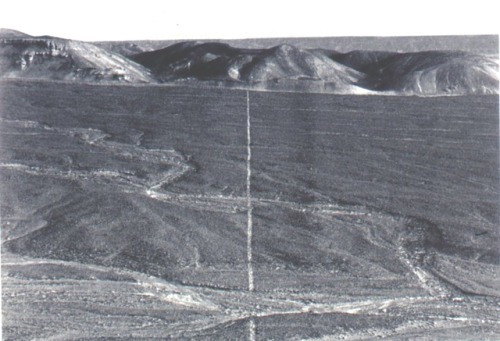
The Art of Walking: Richard Long
British artist Richard Long graduated from St. Martin's Academy in the late 60's and was a pioneer in the new wave of British Sculpture in the late 70's and early 80's - that included Tony Cragg, Antony Gormley, David Mach, Anish Kapoor, and Andy Goldsworthy to name a few (not many well-known women artists from this period!).
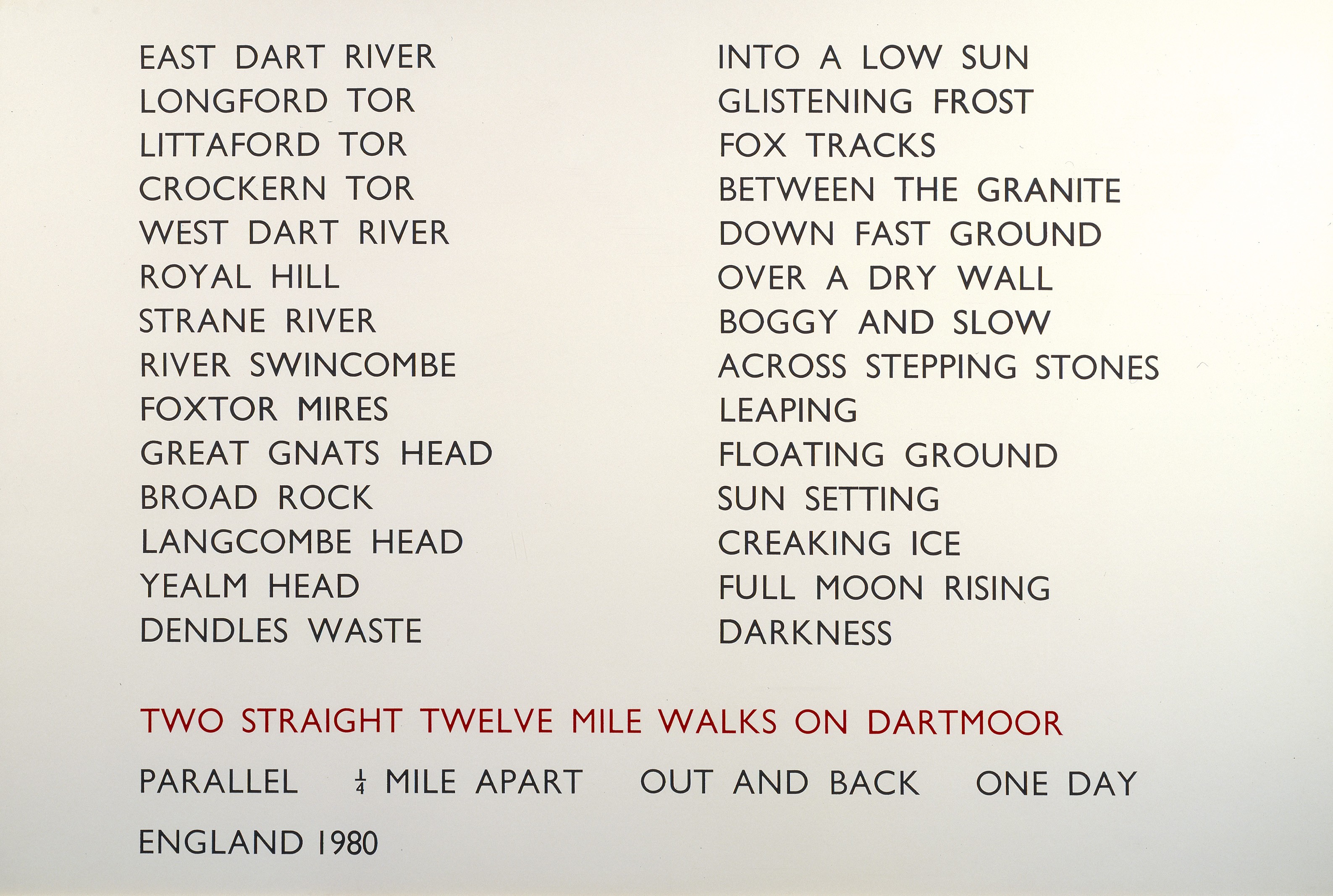
His practice centres on walking: he uses text, photography, and paintings and sculptural assemblages made from found materials - to produce works that evoke questions and experiences of place, situation and attention, often involving 'durational' processes (i.e. walks) that can take several days or even weeks to complete. Like the ephemeral, pain-stakingly contructed works of Andy Goldsworthy - his works remind (and perhaps even inspire) people of a different way of being in the world - a way of intense and sustained attention to, and quiet engagement with the world around us. That fact that he has undertaken these works in nearly every continent on Earth - also brings to mind a concept of Earth as a place - and what it means to be a witness to these diverse places and quiet, otherwise unobserved processes: water evaporating on stones in the Andes, a line walked in grassland, stones piled allong a pathway, lines made by walking…
Part of what makes these works so compelling (like other types of performance) is the sheer discipline and physical presecne and commitment, implied by the processes required to produce the work: the time, concetration, and quality of attention - they show us what is possible for a human to do, and to hold in mind.
Here is a selection of images collected from the net:


His practice centres on walking: he uses text, photography, and paintings and sculptural assemblages made from found materials - to produce works that evoke questions and experiences of place, situation and attention, often involving 'durational' processes (i.e. walks) that can take several days or even weeks to complete. Like the ephemeral, pain-stakingly contructed works of Andy Goldsworthy - his works remind (and perhaps even inspire) people of a different way of being in the world - a way of intense and sustained attention to, and quiet engagement with the world around us. That fact that he has undertaken these works in nearly every continent on Earth - also brings to mind a concept of Earth as a place - and what it means to be a witness to these diverse places and quiet, otherwise unobserved processes: water evaporating on stones in the Andes, a line walked in grassland, stones piled allong a pathway, lines made by walking…
Part of what makes these works so compelling (like other types of performance) is the sheer discipline and physical presecne and commitment, implied by the processes required to produce the work: the time, concetration, and quality of attention - they show us what is possible for a human to do, and to hold in mind.
Here is a selection of images collected from the net:



Monday, 5 September 2011
On The Aesthetics of Urban Walking and Writing
A beautiful essay on walking and the city by Phillip Lopate, via the NYC non-fiction blog/webiste "Tell Mr. Beller a Story", featuring some interesting observations on writting and walking amongst other points…
Around this time I began to appreciate the performance art of pedestrianism. Each New Yorker can seem like a minor character who has honed his or her persona into a sharp, three-second cameo. You have only an instant to catch the passerby's unique gesture or telltale accessory: a cough, hair primping, insouciant drawing on a cigarette, nubby red scarf, words muttered under the breath, eyebrow squinched in doubt. Diane Arbus used to say that in that split-second of passing someone, she looked for the flaw. I would say I look for the self-dramatizing element. How often you see perfectly sane people walking along grimacing to themselves, giggling, or wincing at some memory. Once, I passed a man in a three-piece suit who let out a sigh as intimate as if he had been sitting on the toilet. The expression worn on the street is perhaps more unconscious, therefore truer, than at work or at love. The crowded streets bring out, on the one hand, a pure self-absorption unembarrassed by witnesses; on the other hand, a secret conviction that one is being watched by Higher Powers, the anxious eyes of pedestrians all seeming to ask: Oh Lord, why hast Thou forsaken me?
Phillip Lopate, 2004
Matt Roberts "Every Step" (2008)
Every Step from Matt Roberts on Vimeo.
Here's an interesting walking-related project that combines a pedometer (step-sensor) with a camera, to create visual documents of walks, from an unusual point of view (POV). It could provide a way to appreciate and reflect on our surrounds in greater detail and depth. This makes me think you could also explore different narratives and commentaries applied to these images as a slide show, or interactive map, play back afterwards.
Every Step allows a participant to create a short experimental animation while they walk. Each participant is given an armband with a mounted camera and pedometer. The pedometer is mounted inside the armband and is connected to the camera. The camera is mounted on the armband and points towards the sky. The pedometer acts as a trigger for the camera and an image of whatever is above the participant is taken every time a step is made.

Also reviewed on the awesome and very connected we-make-money-not-art
Saturday, 13 August 2011
Gary Wolf – The Quantified Self
Garl Wolf TED talk, reposted from Orlagh O'Brien's E}V blog
At TED@Cannes, Gary Wolf gives a 5-min intro to an intriguing new pastime: using mobile apps and always-on gadgets to track and analyze your body, mood, diet, spending -- just about everything in daily life you can measure -- in gloriously geeky detail.
At TED@Cannes, Gary Wolf gives a 5-min intro to an intriguing new pastime: using mobile apps and always-on gadgets to track and analyze your body, mood, diet, spending -- just about everything in daily life you can measure -- in gloriously geeky detail.
Gait Analysis and Syntheis: Gender and Walking
A couple of weeks ago I mention 'point-light' gait analysis methods, as a way to think about the different ways we hold ourselves in walking. This is something that is explored a lot in Feldenkrais work: how can we walk more easily - taking advantage of gravity and our musculo-skeletal structure, and re-examine deeply rooted (embodied) naratives of self, self image and how we interact with the world (people) around us. To what extent does our muscular tonus (coordination of tension and relaxation) reflect core habits, and self-conception, interaction and availability to others?
Here's a link to a fascinating interactive website from BioMotion Lab, that allows you to synthesize mood and gender through a point-light animation (click on the picture to open the link):

I find it very interesting to observe pedestrians in the city from this perspective: the body-language of walking, and how we consciously or unconsciously signal our sense of power, desirability, control and mood, and then to reflect on my own musculo-skeletal organization in walking - what am I holding, how are my intentions embodied in this organisation, are these intentions aligned, or contradictory? Its easier to reflect on these very subtle (but powerful) postural differences when you can compare and contrast your own experience - this is something that is often explored in Feldenkrais 'Awareness Through Movement' lessons, at the end of each class: "how do you feel in walking now? what feels different? is this how you usually feel in walking? what in particular feels different?".
The topic of gender and walking can be particularly important for people seeking to transition from one gender to another (or something in between?), and for people who feel the need for a stronger identification with received notions of what it means to be a man or woman in our culture. Bear in mind that gait styles and their gendering can vary significantly from one culture to another, and even from one subculture to another (i.e. Sub-Saharan Africa, East-Asia, Rap/R&B culture, Bikies, Surfies, Drag Queens, Gay Twinks/Bears etc.).
Here's an interesting conversation from a transman's (female-to-male transexual) blog by Dan4th re walking and gait analysis:
Here's a link to a fascinating interactive website from BioMotion Lab, that allows you to synthesize mood and gender through a point-light animation (click on the picture to open the link):
I find it very interesting to observe pedestrians in the city from this perspective: the body-language of walking, and how we consciously or unconsciously signal our sense of power, desirability, control and mood, and then to reflect on my own musculo-skeletal organization in walking - what am I holding, how are my intentions embodied in this organisation, are these intentions aligned, or contradictory? Its easier to reflect on these very subtle (but powerful) postural differences when you can compare and contrast your own experience - this is something that is often explored in Feldenkrais 'Awareness Through Movement' lessons, at the end of each class: "how do you feel in walking now? what feels different? is this how you usually feel in walking? what in particular feels different?".
The topic of gender and walking can be particularly important for people seeking to transition from one gender to another (or something in between?), and for people who feel the need for a stronger identification with received notions of what it means to be a man or woman in our culture. Bear in mind that gait styles and their gendering can vary significantly from one culture to another, and even from one subculture to another (i.e. Sub-Saharan Africa, East-Asia, Rap/R&B culture, Bikies, Surfies, Drag Queens, Gay Twinks/Bears etc.).
Here's an interesting conversation from a transman's (female-to-male transexual) blog by Dan4th re walking and gait analysis:
Provost et al (2008) found that women who were more fertile, or who had an "unrestricted sociosexual orientation" (more likely to engage in short-term mating) found greater masculinity more attractive in point light walkers.And from a totally different perspective: a wonderful and very inspiring formal manipulation of point-light gait analysis technique by the Issey Miyake creative team
…One of the first things that other transmen tried to teach me, when I was first transitioning, was how to walk like a man. I'll tell you flat out: I don't. I still catch myself with quite a bit of hip swing. Still, learning the correct walk is a huge step towards "passing" for most transfolk I've known. I am dubious but fascinated by Brooks et al's finding about walker orientation. This study used 3 men and 2 women as observers. I have to say: I probably spend more time watching men approach and women leave, but that's because I make an effort not to stare at women (when they can see me doing it).
Subscribe to:
Comments (Atom)